
Wed, 11 Nov 2026
बैटरी के ब्लैक मास के निर्यात पर रोक: भारत ने यह अहम कदम क्यों उठाया?
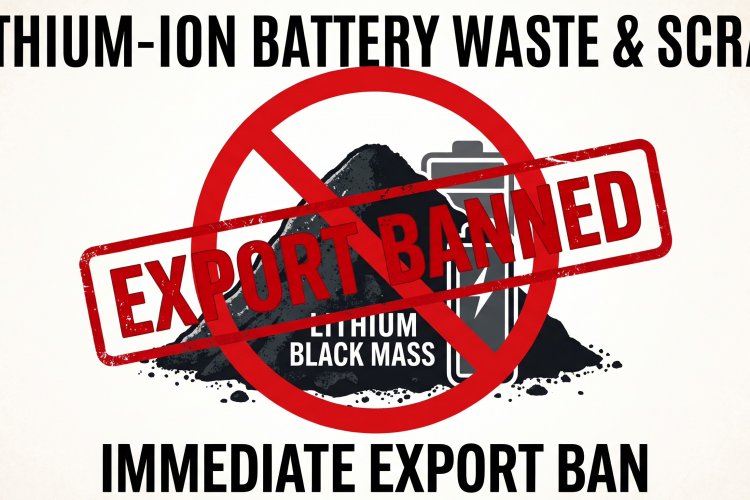
भारत सरकार ने स्क्रैप लिथियम-आयन बैटरी के ब्लैक मास के निर्यात पर तुरंत प्रभाव से रोक लगा दी है। देश के महत्वपूर्ण खनिजों की सुरक्षित आपूर्ति के लिए विदेश व्यापार महानिदेशालय (DGFT) ने 10 नवंबर 2026 को एक अधिसूचना (सं. 49/2026-27) जारी की। इस कदम से इस अत्यधिक मूल्यवान संसाधन के देश से बाहर जाने पर रोक लग गई है।
Wed, 11 Nov 2026
The Black Mass Export Ban: Why India Locked Down Its Battery Scrap
The Ministry of Commerce and Industry has issued Notification No. 49/2026-27, prohibiting the export of lithium-ion battery waste and scrap, commonly known as black mass, with immediate effect. This strategic pivot targets materials under ITC (HS) Code 8549 1400 to secure critical minerals for India's domestic EV supply chain. The ban reshapes the market by forcing a localized circular economy, presenting both significant scaling opportunities and new economic viability hurdles for domesti
Fri, 30 Oct 2026
New RCM & 2% GST TDS Applied on Purchase of Battery Scrap and E Waste from 1st November 2026
A massive, long-awaited breakthrough that lead recyclers and the battery industry have aggressively petitioned and struggled for is finally a reality. To eliminate 'fake invoicing' and the risk of buyers getting their Input Tax Credit (ITC) blocked due to unregulated purchases from unregistered scrap dealers, the GST system has been structurally overhauled. The implementation of reverse charge mechanism (RCM) for unregistered purchases and a mandatory 2% GST TDS for registered transac
Fri, 30 Oct 2026
बैटरी स्क्रैप व ई वेस्ट खरीद पर RCM और 2% GST TDS 1 नवंबर से लागू
फर्जी बिलों और कानूनी झंझटों से मुक्ति: उद्योग के लंबे संघर्ष की ऐतिहासिक जीत - निश्चिंतता से काम करने के लिए और फर्जी बिलों (Fake Billing) की परेशानी से बचने के लिए लैड रीसाइक्लर्स और बैटरी उद्योग जिस नीतिगत बदलाव को लंबे समय से चाहता था, वह एक बड़े संघर्ष और सतत प्रयासों के बाद अब साकार हो गया है। अनरजिस्टर्ड स्क्रैप डीलर्स से खरीद पर RCM लागू होने और रजिस्टर्ड सप्लायर्स पर 2% GST TDS लागू होने से अब फर्जी बिलिंग के सिंडिकेट और बाद में विभाग द्वारा ITC ब्लॉक किए जाने के डर से हमेशा के लिए मुक

Thu, 10 Oct 2024
How to account for TDS and TCS under GST and Income Tax on Lead Scrap Purchase- Finance Ministry
With effect from 10th October 2024, Tax Deducted at Source (TDS) under Goods and Services Tax (GST) has been implemented. This system is analogous to TDS under Income Tax, with a TDS rate set at 2% of the taxable value. Unlike Income Tax, the credit of TDS deducted by the buyer will be available monthly, reflected in the cash ledger.

Tue, 10 Sep 2024
GST Council proposes RCM on Metal Scrap Procurement
In the 54th meeting of the GST Council, it was decided that the Reverse Charge Mechanism (RCM) will be introduced on the purchase of metal scrap from unregistered vendors. The buyer of scrap will be liable to pay tax under RCM even if the scrap seller is not registered in GST or his business is below the limit of GST registration. The long-awaited demand of the lead recycling industry has been fulfilled.
Tue, 10 Sep 2024
जीएसटी परिषद ने मेटल स्क्रैप खरीद पर आर सी एम प्रस्तावित किया
जीएसटी परिषद की 54 वीं बैठक मे निर्णय लिया गया की अपंजीकृत विक्रेताओं से धातु स्क्रैप की खरीद पर रिवर्स चार्ज मैकेनिज्म (आरसीएम) शुरू लागू होगा । स्क्रैप का खरीदार आरसीएम के तहत कर का भुगतान करने के लिए उत्तरदायी होगा, भले ही स्क्रैप विक्रेता जीएसटी में पंजीकृत न हो या उसका व्यवसाय जीएसटी पंजीकरण की सीमा से कम हो। लैड रीसाइक्लिंग उद्योग की लंबे समय से प्रतीक्षित मांग पूरी हो गई है।
Fri, 01 Mar 2024
CPCB directs all SPCBs/PCCs to withdraw CTO of Battery Recyclers for not complying with EPR
The Central Pollution Control Board (CPCB), under battery waste management Rules 2022, on February 26, 2024 issued a direction to all SPCBs/PCCs to withdraw the consent to operate of such waste battery recyclers who are not uploading the necessary documents and invoices required for the generation of the EPR credits on the online EPR portal. Additionally, CPCB directed the SPCBs/PCCs to verify the installed plant & machinery and the capacities of the waste battery recyclers, as well as the
Fri, 01 Mar 2024
ईपीआर अनुपालन पर सीपीसीबी के नए निर्देश - केंद्रीय प्रदूषण नियंत्रण बोर्ड ने बैटरी रिसाइक्लर्स
बैटरी वेस्ट मेनजमेंट रुल्स 2022 के अनुसार प्रदूषण नियंत्रण बोर्ड (CPCB) ने 26 फरवरी, 2024 को सभी SPCB/PCC को ऐसे बैटरी रिसाइक्लरों की CTO को वापस लेने का निर्देश जारी किया, जो ऑनलाइन EPR पोर्टल पर EPR क्रेडिट का सृजन कर जारी करने के लिए आवश्यक दस्तावेज और चालान अपलोड नहीं कर रहे हैं।

Mon, 26 Feb 2024
New EPR rules are taking shapes under PMO directive to make Battery Scrap recycling more efficient a
As per the provision under Rule 4 (1), Producer has the obligation of Extended Producer Responsibility (EPR) for the Battery that they introduce in the market to ensure the attainment of the recycling or refurbishing obligations. Extended Producer Responsibility (EPR) is a policy that holds manufacturers and importers of electronic products responsible for the entire lifecycle of their products. This includes managing the waste generated from those products.